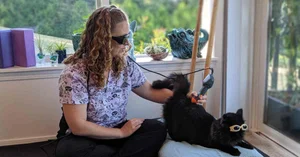
We wrote this last October, in the thick of our own dog Chloe's recovery from surgery. We're publishing it now, months later and with the benefit of hindsight, because those first 24 hours taught us things no discharge sheet ever covered. Chloe has fully recovered — more on that at the end.
If you're reading this the night before or the night after your pet's surgery: breathe. We wrote this for you.
As a veterinarian, I've sent countless pets home with a comprehensive list of post-operative instructions: how often to medicate, when and how to check the incision, and the critical need for an E-collar (an Elizabethan collar, not to be confused with an electric or shock collar — we're talking here about the infamous "cone of shame"). It's the list that makes sense on paper, the clinical advice we've all been trained to give.
But when my own dog, Chloe, came home after recent dental work and having two mass removals on her back right leg, I was immediately confronted with a different, unspoken list. It's the one I call the "Other Discharge Instructions" — the messy, emotional, and sleep-depriving to-do list that defines the first 24 hours of care for a fresh post-op pet.
I actually started this blog post two years ago, after our cat, Wesley, had to undergo an aggressive emergency urinary surgery to save his life. And with Chloe, I realized just how much the clinical advice fails to prepare us, the dedicated pet owners who take care of our beloved pets, for the real-life work that these first 24 hours necessitates.
Here is my veterinary and pet-owner-tested guide to surviving the first 24 hours after your pet comes home from surgery.
Part One: The Environment—Protecting Your Pet (and Your Carpet)
Your pet is coming home drugged, disoriented, stressed, and potentially leaking. You need a safe, contained, and easily cleanable space ready before you even walk out the clinic door at pick-up time.
Prepare for Blood, Ooze, and Accidents
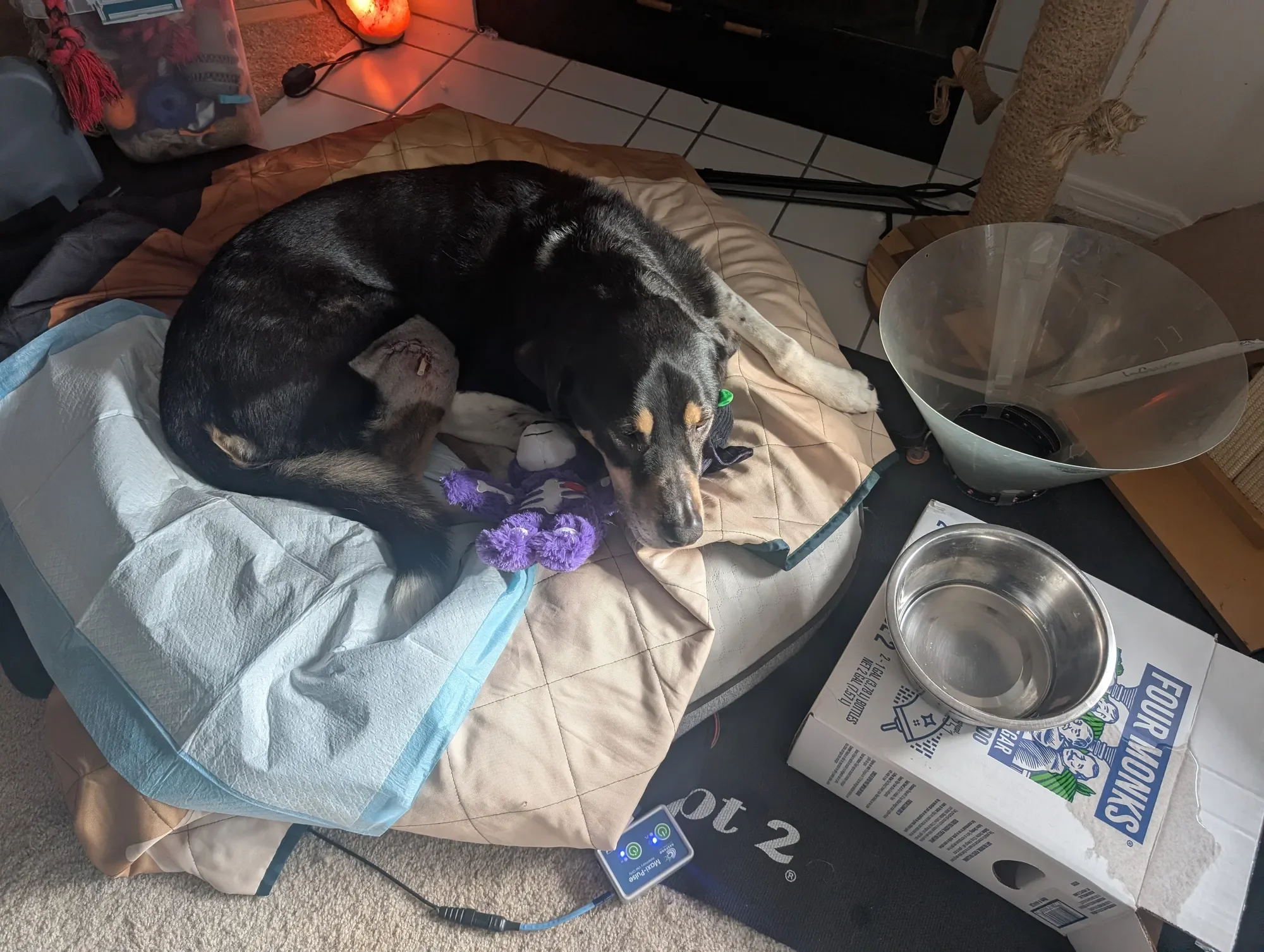
Any incision can ooze. If your pet has a drain (as Chloe did), it's literally designed to release discharge. Combine that with a pet who is loopy from anesthesia and has impaired mobility, and you have a recipe for mess you need to mitigate.
Protect Your Flooring. If you have carpet, you need a plan. Waterproof blankets, large potty pads, or even a cheap shower curtain liner underneath a comfortable sheet or blanket are your best friends. You are creating a critical barrier.
Keep Hydrogen Peroxide Handy. This is non-negotiable for carpet owners. If a fresh blood stain appears, hydrogen peroxide is one of the best things you can use to lift it.
Anticipate Urinary/Fecal Accidents. This is not a house-training failure; it's a direct side effect of the drugs. When Wesley came home from his surgery, he was incontinent and just dripped urine wherever he walked for the first day. Chloe, after her surgery, was so dysphoric and low-energy that she simply peed on her bed because she couldn't muster the energy to get up, or the mental focus to ask to go out. Have those pee pads ready, even for the most perfectly trained dog. Check the pee pads frequently — if your pet is sleeping through their recovery, they may soil themselves while sleeping and never alert you, but you still have to make sure they're staying clean and dry.
Create the Human-Friendly Recovery Zone
Your pet should not have free rein of the house. This is a containment effort for their safety.
Small and Safe is Best. Set up a small space—a partitioned area or a small room—where they can stand up fully, turn around, and lie down comfortably, but cannot do a lot of walking, running, or jumping. Excessive activity can pop sutures or cause internal bleeding, and presents a “fall risk” to larger pets who may still be groggy from the drugs.
Comfort for the Humans. Seriously, you need a comfortable station for yourself. In those first few hours, most pets are going to find immense comfort just from having their humans sitting quietly, present, and close by. You are on duty, so make your station comfortable—you'll be there a while.
Part Two: The Emotional Rollercoaster—Pain and Dysphoria
Your discharge instructions covered the oral pain medications, but nothing quite prepares you for the emotional display that often comes with waking up from general anesthesia.
The Agitation of Dysphoria
When we say a dog is dysphoric, it means they have an overall sense of "this doesn't feel good" after general anesthesia. Some dogs are fine with a little drug-induced disassociation from real life (the "I'm relaxed" type), and others—like Chloe—hate the sensation of not being in control of their body. For about the first eight hours she was home, she was very agitated, whining near constantly and inconsolably, and generally just very distraught. This is where things get hard for us as caretakers, because dysphoria worsens pain, and pain worsens dysphoria. They feed off each other. But the way to treat these two problems are to take opposite actions - if painful, give more pain meds! If dysphoric, wait to give pain meds until they’re more comfortable in their heads.
It’s even difficult for emergency vets to grapple with: Is the patient dysphoric (and needs less drug) or painful (and needs more)? This can be really challenging for an owner at home to discern.
Our Plan for Chloe: We knew she was both dysphoric and painful. She was crying out in a painful, heartbreaking way every time she moved, but she was also agitated and unhappy when she was just at rest. We chose comfort and being proactive with the pain schedule. Following the dosing plan our veterinarian had given us for Chloe, we gave her gabapentin on a proactive schedule and stayed up with her, doing ice on the deeper of the two incisions every two hours to manage the physical pain.
The Comfort Factor: She was comforted by us being present and, oddly enough, by a small space heater pointed at her bed. She was highly reactive to any movement, so we stayed low, stayed quiet, and waited. When she finally felt enough relief to fall asleep for us, we knew we could sneak in a few hours of sound sleep ourselves.
The Non-Negotiable E-Collar
Chloe is a very well-behaved dog, but even the best dogs will lick or chew at a catheter site or incision the second they are left unsupervised.
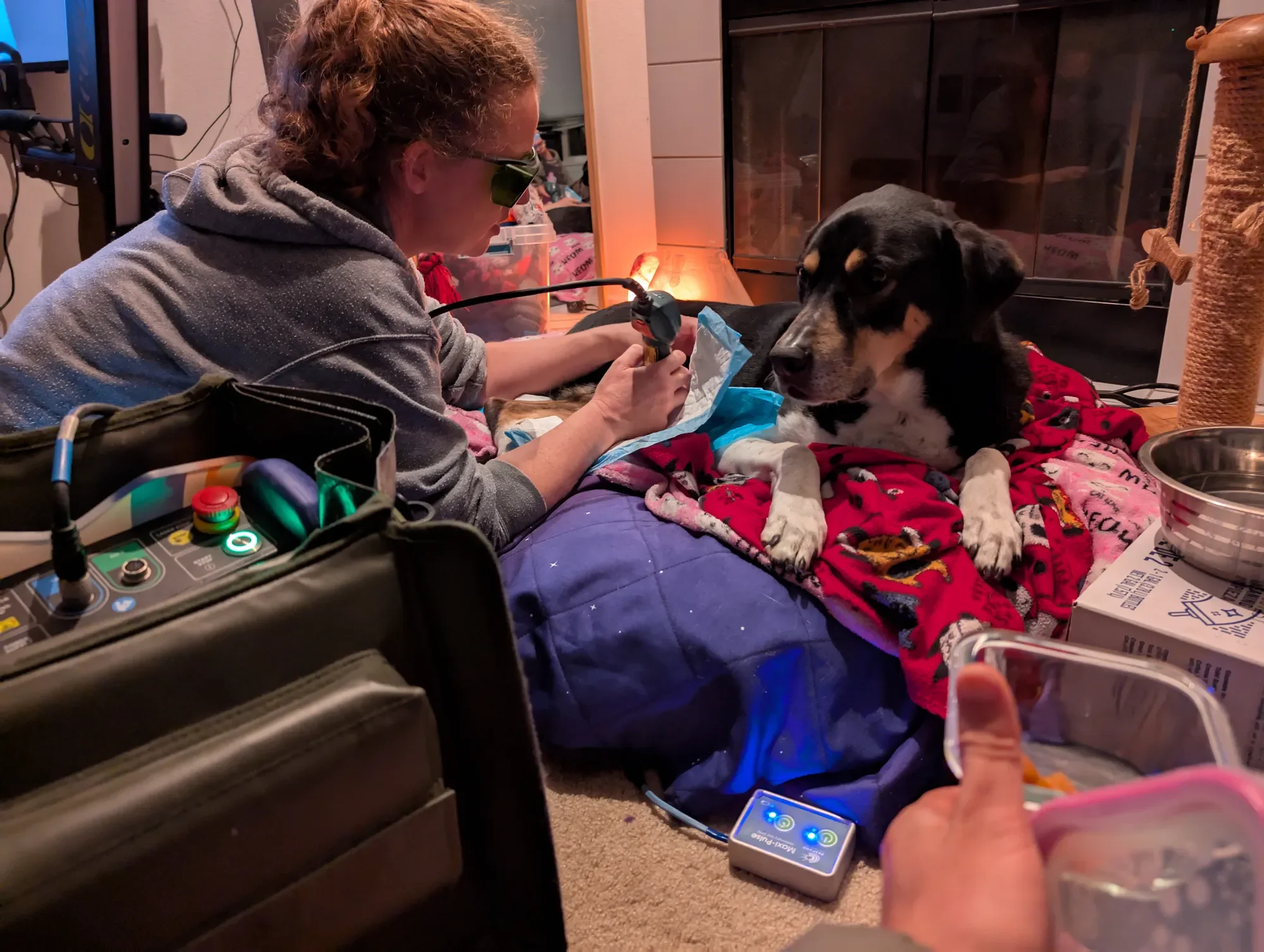
We kept her e-collar off only when she was being directly supervised—when I was actively doing laser therapy or massage, while she was eating, or while going outside for potty breaks. The moment we stepped away, the cone went on. She proved why it was needed on one occasion when I walked away and forgot to put it on, only to catch her immediately licking her IV catheter site on her front leg. If you are not actively watching your pet, the cone needs to be on. Any dog can lick anything at any time.
One important caveat: as veterinary professionals, we know Chloe's temperament well, and we made a deliberate judgment that she could be safely uncovered for short, directly supervised stretches. That's a clinical judgment call and not a default setting. Plenty of dogs, depending on personality, anxiety, or how fixated they get on a surgical site, can't be trusted to leave an incision alone even with you sitting right beside them. If you have any doubt about your own pet or if your vet has explicitly directed to keep the cone on at all times, keep the cone on full-time and treat supervised removal as the exception, not the rule.
If your dog doesn’t do well with E-collars, have another plan in place with your Veterinarian before picking your pet up from surgery (recovery shirts or suits can be an option for some pets in some circumstances).
If the surgery is not an emergency and you have the luxury of time, I’d recommend getting an E-collar before it’s actually necessary and starting some positive reinforcement training with it, so it’s less scary to wear when they’re actually feeling the emotions of a high stress day with weird drugs and uncomfortable surgical sites.
Part Three: The Logistical Hurdles—Mobility and Appetite
When we picked Chloe up, she was so uncomfortable she put on the brakes and cried loudly when we tried to get her to walk to the car. My 70-pound dog had to be carried from the side door to the parking lot and placed into the car. At home, that meant carrying her up and down a half-flight of stairs for every potty attempt that night and the next day. This is where mobility slings or harnesses can be very helpful, enabling safer movement for both pet and owner alike (Pro tip: practice using these devices in advance of the surgery so you don’t have to learn how to use them on the fly).
The Potty Break Challenge
Painful Posturing: Chloe is used to squatting to pee on her back right leg—the one that had surgery. She didn't know how to squat on the left, and in her loopy state, learning a new physical skill was too much. We carried her out every few hours, but she didn't pee outside at all that first night. It wasn't until the next morning that she was mentally and physically ready to go outside. We were prepared for this, and she ended up just going on her pee pads a couple of times throughout the night (which we were diligent about changing out as soon as they were soiled).
Pooping Time Lag: Don't panic if your dog doesn't poop for a few days. Fasting before surgery, the slowing effects of anesthesia on the intestinal muscles, pain medications, and the lack of physical activity all slow down GI transit time. It is generally okay for most patients to go three to four days without a bowel movement.
Appetite and the Anti-Anxiety Food Plan
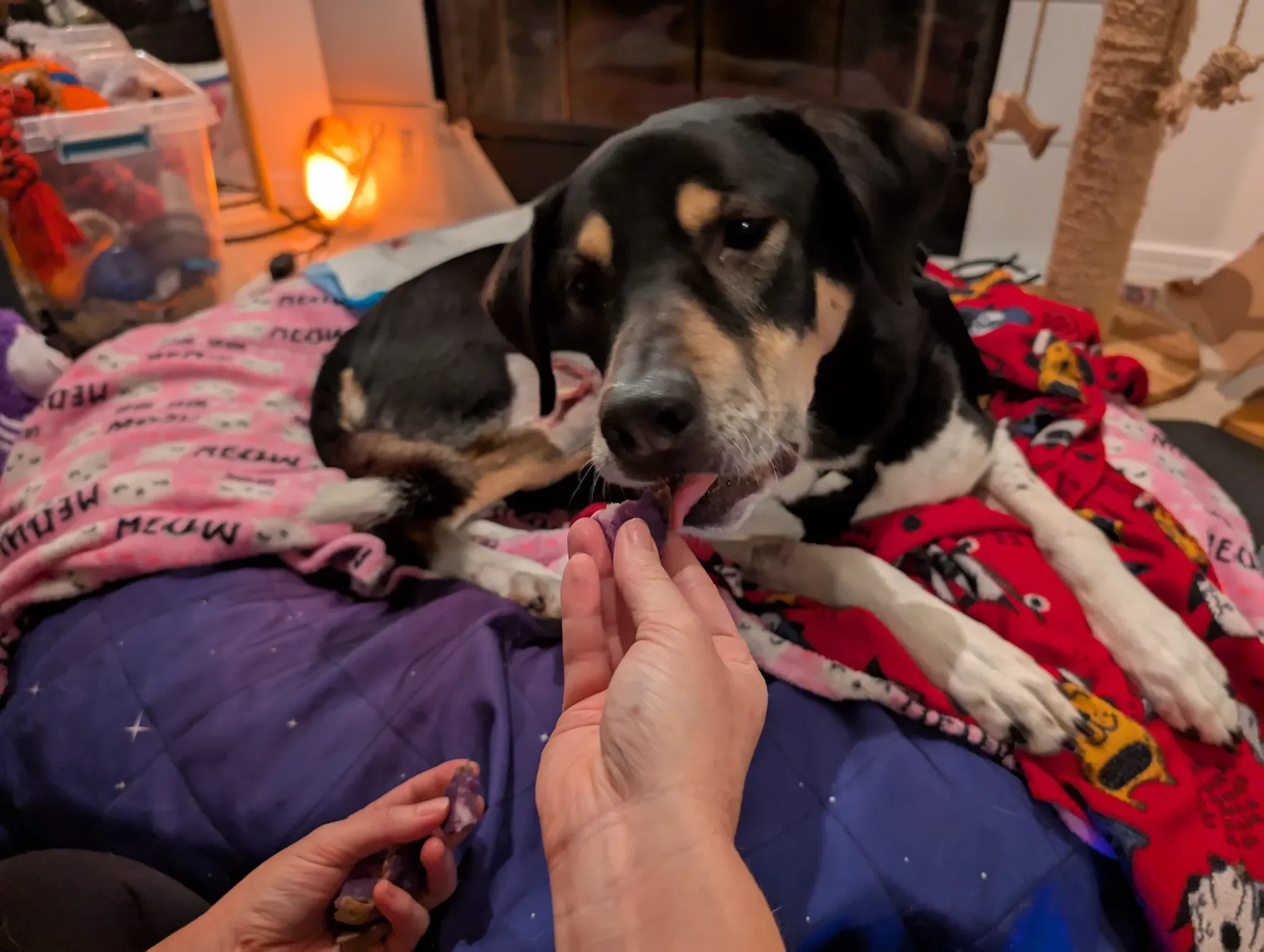
It's a lovely sentiment to give a distraught post-op pet an "extra special treat," but one cookie that's gone in 3 seconds isn't enough for a severely anxious animal. When I say it’s time to ramp up the “specialness factor” I mean let’s get serious about toys and special treats.
Emotional Distraction is Key: Chloe got five new toys and three new, very special treats that we rotated. In the first 24 hours, she didn't play, but she found immense comfort just from laying on the new toys and having them close by. They were a necessary distraction from her mental discomfort.
Prepare Easily Digestible Comfort Foods: The medications can cause nausea and affect appetite. We stocked up on Okinawan sweet potatoes (her very favorite), scrambled eggs, and steamed veggies like bok choy and napa cabbage. These are all easily digestible foods we know she enjoys eating. She ended up needing them, as her sensitive gastrointestinal tract and overall appetite were affected. Having easily accessible, familiar, and highly palatable food is a game-changer when pills need to be administered.
The first 24 hours after pet surgery are a blur of checking incisions, administering meds, and dealing with an assortment of bodily fluids. But by anticipating the logistical and emotional demands, you set up both yourself and your pet for a calmer, less stressful road to recovery.
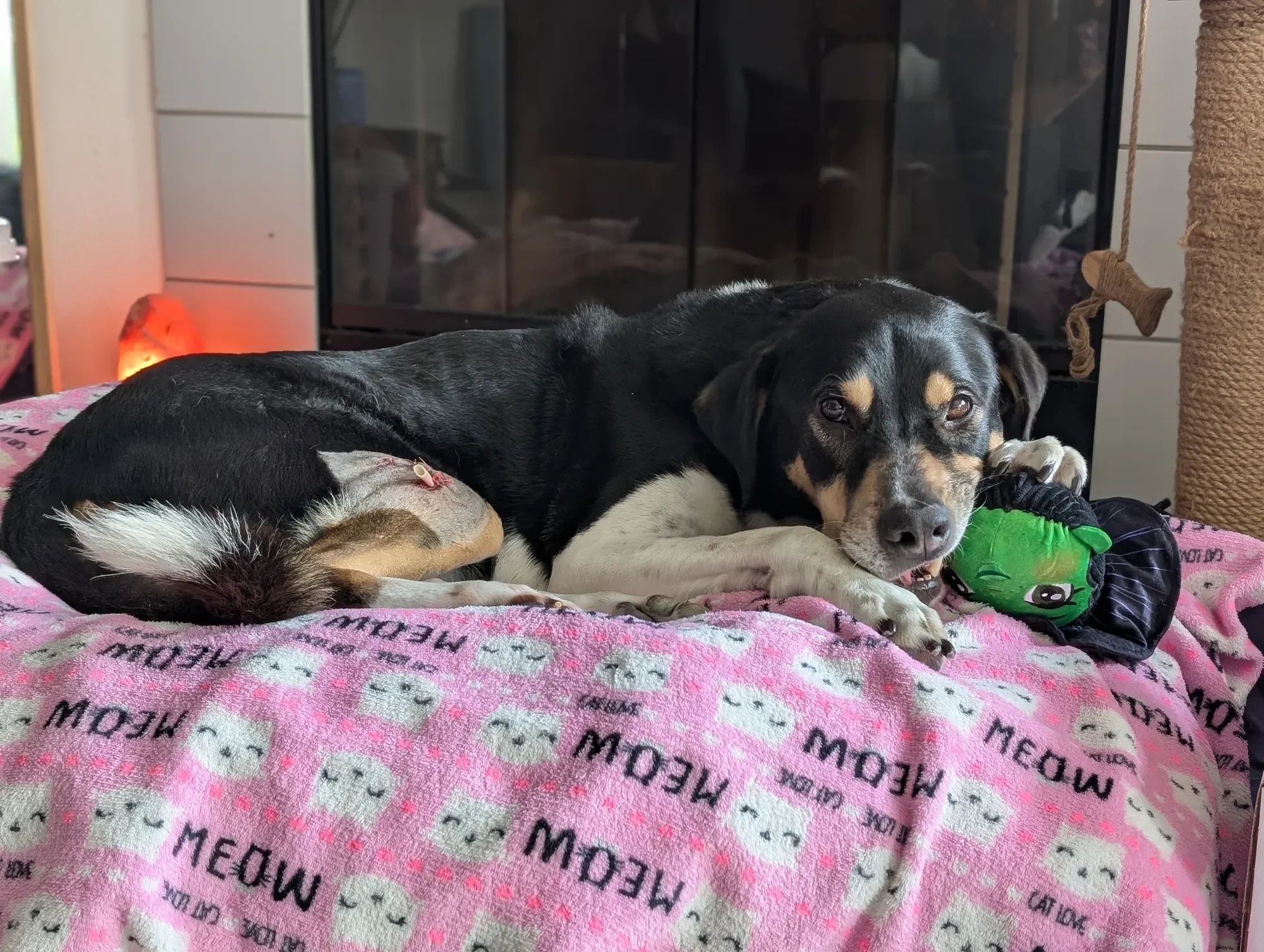
An update, from the other side
Chloe recovered completely. The two lipomas we had removed from her thigh, right in the knee region, had been quietly changing how that knee moved and how the surrounding myofascia loaded, throwing off her gait. Once they were out, and because we're rehabbers who got her up and moving safely and early, that gait normalized fast.
Honest confession: I wish we'd filmed her gait before and after, because the difference was striking and I'd love to show you. But we were too deep in the work of caring for her to think about a camera, which is its own small lesson about being present in the moment instead of documenting it.
And here's the part we want to be honest about: recovery is rarely a tidy finish line. Even now, Chloe has chronic things we manage day to day. We don't get it perfect. We make mistakes, we adjust, and we do what we can with what we have in front of us, just as we teach our clients to do. That's not a failure of the plan. That is the plan. Sustainable care is the kind you can actually keep doing on a hard week.
If you're staring down a surgery and the home-care part feels heavier than the medicine itself, that's exactly the conversation we're built for. Our consultations exist to turn a plan you've been handed into a plan you can actually carry — one that fits your real life, your real schedule, and your real limits.
Wherever you are right now, there's a next step:
→ I want to understand how recovery and rehabilitation actually work.
→ I'm in the Gig Harbor area (or willing to travel) and want a plan I can actually follow.
→ I'm not local, but I want this kind of support for my pet.
If you're searching on your own, look for credentialed rehabilitation professionals — credentials like CCRT or CCRP, or a board-certified rehabilitation specialist (DACVSMR), signal rigorous, vetted training. Good places to start:
We can't personally vouch for every provider in these directories, but each maintains meaningful credentialing standards. When in doubt, ask about a provider's specific certifications and their experience with your pet's condition.
This article is for general educational purposes and reflects our personal experience caring for our own dog. It is not a substitute for individualized veterinary advice, diagnosis, or treatment, and nothing here is a specific recommendation for your pet. Every animal is different — always consult your own veterinarian before making decisions about medications, recovery, or home care. If your pet may be experiencing a medical emergency, contact your veterinarian or an emergency veterinary hospital right away.